
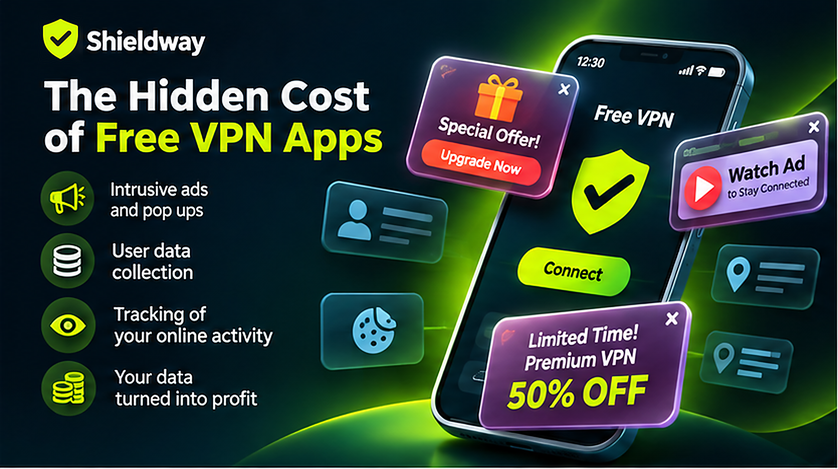
How Does a Free VPN Provider Make Money? Do Free VPNs Sell Your Data?
Free VPN providers make money through several business models, including advertising, paid subscriptions, affiliate partnerships, data monetization, and bandwidth sharing. However, not every free VPN sells your personal information. Some providers use free plans to attract customers who later upgrade, while others receive funding from paying subscribers or allow users to contribute unused internet bandwidth. Understanding how a free VPN provider makes money is essential before trusting it with your online activity.
The important question is not simply whether a VPN is free. It is who pays for the service, what the company receives in return, and whether its business model compromises your privacy. This guide examines how free VPNs make money, why some sell user data, and how to identify services that offer genuine privacy protection without hidden costs.
Why Does a Free VPN Provider Need to Make Money?
Running a VPN service requires considerably more than developing an application and making it available for download. A VPN company must maintain servers in different locations, pay for bandwidth, manage network infrastructure, develop applications, fix software problems, and provide customer support. As the number of users increases, these costs can increase too.
Every time someone connects to a VPN server, the provider must process and route their internet traffic. It also needs to maintain encryption, prevent unauthorized access, and protect its infrastructure against security threats. A reliable service requires ongoing investment in hardware, software development, security testing, and technical staff. Even a relatively small VPN provider has recurring operating expenses.
Business model | How the VPN provider earns money | What users should consider |
|---|---|---|
Freemium subscriptions | Free users upgrade to paid plans | Free plan limitations and upgrade costs |
Advertising | Advertisers pay to display promotions | Ad tracking and third party data sharing |
Data monetization | Information may be shared or sold to commercial partners | Data collection, privacy policies, and browsing logs |
Bandwidth sharing | Business customers pay to use participating users' unused bandwidth | IP address usage, consent, and data processing |
Affiliate partnerships | The provider earns commissions from referrals | Ownership, commercial relationships, and transparency |
Bundled services | The free VPN attracts customers to other paid products | What other services collect and how information is shared |
Not all these business models create the same privacy risks. A freemium VPN funded by paid subscribers operates differently from an advertising-supported application or a bandwidth-sharing service such as Shieldway's ByteConnect. Understanding how each provider earns revenue helps you evaluate whether its business model aligns with your expectations for online privacy.
This explains why the question of how free VPN providers make money is so important. If a company gives thousands or millions of users a free service, it still needs to make money somehow. The revenue might come from paying subscribers, advertising, business partnerships, or another source. The absence of a subscription fee does not mean the company operates without financial incentives.
How Do Free VPNs Make Money Through Paid Plans?
One of the most established business models is called freemium. A VPN provider offers a basic free service and encourages users to upgrade to a paid subscription when they need additional features. In this model, the free version functions as an introduction to the product, while paid customers help cover the infrastructure and development costs.
Free plans commonly limit server locations, simultaneous connections, advanced security features, or monthly data allowances. Some providers also restrict streaming access or offer fewer configuration options. These limitations are not necessarily evidence of poor privacy. They can simply encourage free users to purchase a paid service when their requirements increase.
Proton VPN is an example of a provider that says its free plan is supported by paying members of its community rather than personal data sales. Its free service offers unlimited data but restricts server selection and simultaneous connections. Users who need access to more locations and additional features can upgrade to a paid plan. You can review its explanation in How Do Free VPNs Make Money? and its free plan documentation.
This model shows that paid VPNs can effectively subsidize free users. The company benefits from attracting a large audience, some of whom eventually become paying subscribers. The free plan also gives potential customers an opportunity to test the software before committing to a subscription.
Do Free VPN Providers Make Money Through Advertising?
Advertising is another common way to generate revenue. Some free VPN services display banners, sponsored messages, video advertisements, or promotional offers inside their applications. Advertisers pay the VPN company to reach users, and the provider receives revenue from displaying those advertisements.
However, there is an important distinction between displaying an advertisement and using personal information to target it. An application can show contextual ads without necessarily recording a user's browsing history. Personalized advertising is different because it may involve identifiers, usage data, device information, or other details that help companies or advertisers decide which ads to display.
The Federal Trade Commission explains that some VPN apps are free because they sell advertising or share information with third parties. It advises users to examine app permissions, terms, and privacy policies before installation. Read the FTC's guidance on choosing a VPN app.
A legitimate advertising model should explain what information is collected, who receives it, and whether users can decline tracking. Be particularly careful when an application requests unnecessary permissions or displays advertising that seems unrelated to its basic VPN functionality. Advertising does not automatically mean that a service is unsafe, but unclear tracking practices deserve attention.
Do Free VPNs Collect and Sell User Data?
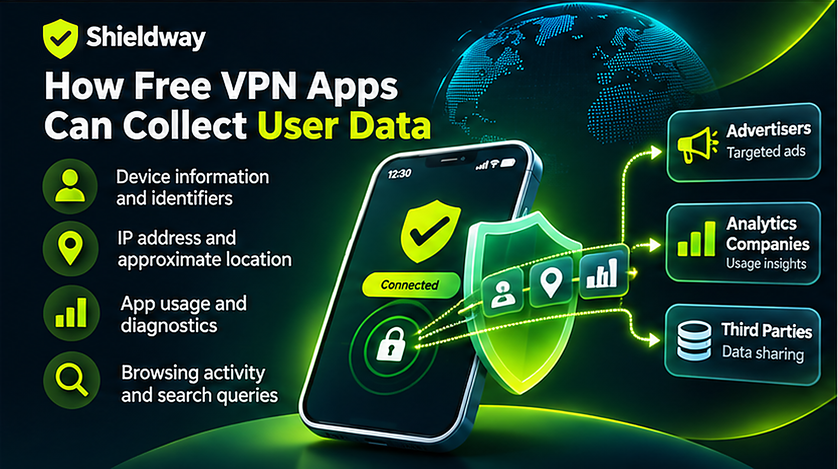
Some do, but it would be inaccurate to claim that every free VPN provider sells personal information. Data monetization can take several forms. A company might collect device identifiers, IP addresses, application usage information, or browsing activity and share selected information with advertisers, analytics companies, or data brokers.
There is also a difference between selling identifiable personal information and sharing aggregated or anonymized statistics. Some companies collect usage data to understand performance, improve their applications, or measure advertising effectiveness. Others may use more intrusive tracking methods. The important issue is what the privacy policy permits and what actually happens when the application is connected.
Research published by Top10VPN on June 5, 2024 provides a concerning example. Its investigation tested 100 of the most popular free Android VPN applications on Google Play. It found that 71 shared some form of personal data with third parties, including advertising companies and data brokers. The same research found that 88% experienced some type of data leak, while 19% were flagged as malware by antivirus scanners. These results apply to the tested applications, not every free VPN on the market. See the full Free Android VPN Security Flaws investigation.
The claim that free VPNs sell user data should therefore be investigated rather than automatically accepted. Some providers collect and sell information for profit, while others explicitly state that they do not. Before deciding whether a provider might sell your data, examine its ownership, privacy policy, independent research, and relationships with advertising partners.
A VPN is supposed to improve online privacy. It would be counterproductive to use a service that protects your connection from an ISP while allowing another company to monitor your activity or sell user data to third parties. Look for explicit disclosures about what information the company collects, whether it keeps logs, and whether it may sell or share information.
How Does Bandwidth Sharing Help a Free VPN Make Money?
Bandwidth sharing is a different approach to monetization. Instead of displaying advertisements or selling browsing information, a service allows users to contribute a limited amount of unused internet bandwidth to a separate network. Business customers can then use that network to route ordinary web requests through participating connections.
This model can support activities such as collecting publicly available prices, checking market information, or viewing websites from different network locations. The business customer pays for access to the network, and the application developer or service provider earns revenue. The user receives access to a free service in exchange for allowing the agreed bandwidth-sharing activity.
Shieldway provides a practical example of this approach through ByteConnect. Its free VPN access requires users to enable ByteConnect bandwidth sharing. The application requests permission before activation, and disabling the feature also disconnects the free VPN.
According to the ByteConnect SDK Privacy Policy, participating devices lend a limited amount of unused bandwidth to its network. Verified business customers use that network to route ordinary web requests, such as checking publicly available prices or market data. ByteConnect states that it does not display advertisements, mine cryptocurrency, or collect users' browsing history, personal files, photos, or messages. It does, however, process IP addresses and technical information such as device model, operating system, connection type, approximate location, and diagnostic data.
This is an important distinction. Bandwidth sharing is not necessarily the same as selling browsing history or personal files. It is a separate business model with its own privacy and network considerations. Users should understand which requests can use their connection, how their IP address is involved, what information is collected, and how to withdraw consent.
For additional information, read Shieldway's guide to free VPNs, review its features, and examine the ByteConnect SDK EULA. Shieldway also publishes a separate no-logs policy explaining how VPN browsing information and ByteConnect data processing are treated.
Shieldway's approach is particularly relevant because it separates its VPN privacy commitments from its bandwidth-sharing disclosures. The company explains how WireGuard encryption, private DNS, and its kill switch protect the VPN connection, while ByteConnect has a separate explanation of its data processing. This gives users a clearer basis for deciding whether the free service suits their privacy expectations.
Do VPN Companies Make Money Through Partnerships and Affiliate Deals?
Some VPN providers belong to larger technology companies or operate alongside other digital services. Their revenue may come from partnerships, affiliate arrangements, security products, business subscriptions, or bundled software. The VPN itself may be free because it helps attract customers to other products.
Affiliate marketing is another possibility. A VPN company can pay websites, content creators, and comparison platforms a commission when someone purchases a subscription through a referral link. This is a common marketing model across the software industry. It does not necessarily involve sharing the referred customer's browsing history.
The Center for Democracy and Technology has highlighted the importance of transparency around VPN business models. Its Signals of Trustworthy VPNs initiative asks providers to explain their sources of revenue, partnerships, ownership, and data practices. It also notes that VPN companies may offer white-label services or provide their technology to other businesses.
This is why a privacy policy should identify more than just the application developer. Check whether the VPN company has parent companies, advertising partners, analytics providers, or external operators. A business relationship does not automatically mean your information is being sold, but users should know who is involved in providing the service.
Why Do Some Free VPN Apps Inject Ads or Contain Malware?
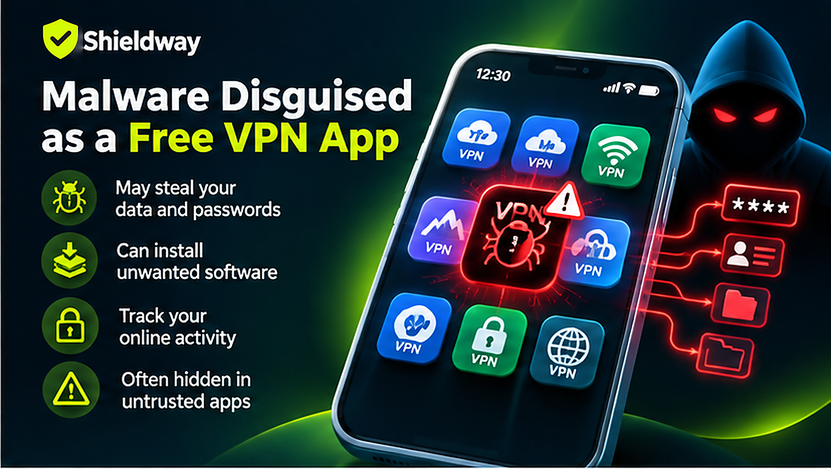
Some free VPN apps inject ads or contain malware because their operators use advertising, tracking, or questionable software distribution to make money instead of investing in a reliable privacy service. Responsible companies may cover operating costs through advertising or paid upgrades. Less trustworthy operators may use excessive adverts, collect user data, bundle unwanted software, or distribute malicious code.
Ads alone do not prove that a VPN is unsafe. The concern is how the app delivers them and what information it collects. An app that tracks users, redirects browsing, or installs extra components without clear consent creates privacy and security risks. Some free providers also use bandwidth sharing as a revenue model, which introduces different privacy considerations. Read more about whether bandwidth-sharing VPNs are safe.
Independent testing has identified security problems in some free VPN apps. A 2024 Top10VPN investigation examined 100 free Android VPN apps and found privacy and security issues in a substantial portion of the sample. This does not mean every free VPN is malicious, but it shows why users should check the developer, permissions, privacy policy, and reviews before installing an app.
Users should also check whether a VPN has essential protection against unexpected disconnections. Learn more about free VPNs with a kill switch. Choose a provider that explains how it earns money and publishes clear privacy terms.
How Can a Free VPN Provider Be Trustworthy Without Selling User Data?
A free VPN can operate without selling personal information if it has another sustainable source of revenue. For example, it might receive funding from paid subscriptions, donations, an existing software business, or a clearly disclosed bandwidth-sharing arrangement. The business model matters because it helps explain what incentives influence the provider.
When looking for a reputable VPN, start by checking its privacy policies. A strict no-log policy should explain whether the provider records browsing activity, IP addresses, DNS queries, connection timestamps, or other information. Do not rely on a promotional statement alone. Read the privacy policy and check whether it describes sharing data with third parties.
You should also investigate the company's ownership, operating history, and independent security assessments. Check whether the VPN encrypts data using modern protocols, supports features such as a kill switch, and explains how its infrastructure is maintained. A secure VPN connection is useful, but encryption alone cannot stop the provider from collecting information outside the encrypted tunnel.
Be aware that a no-logs statement does not automatically mean a service collects no information whatsoever. Account details, payment records, application diagnostics, and consent records may be processed separately from browsing logs. The important question is whether the provider clearly distinguishes these categories and explains what it does with them.
Shieldway is an example of a provider that publishes separate explanations for its VPN activity data and ByteConnect's processing. Its no-logs policy states that it does not record browsing destinations, DNS queries, traffic contents, or per-destination VPN activity. It also openly identifies the operational and consent-based information that may be processed.
For transparency, Shieldway's current policy says that its no-logs policy has not yet undergone a dedicated independent audit. Independent verification is valuable, and users should distinguish a published privacy commitment from a third-party audit specifically examining that commitment. The company makes its policy publicly available rather than asking users to rely only on a marketing promise.
A good business model, transparent policies, and verifiable security practices are stronger signs of trust than an advertisement promising total anonymity. The point of using a VPN is to improve privacy and security, not simply to hide your IP address while transferring trust to an unknown company.
What Should You Check Before You Use a VPN?
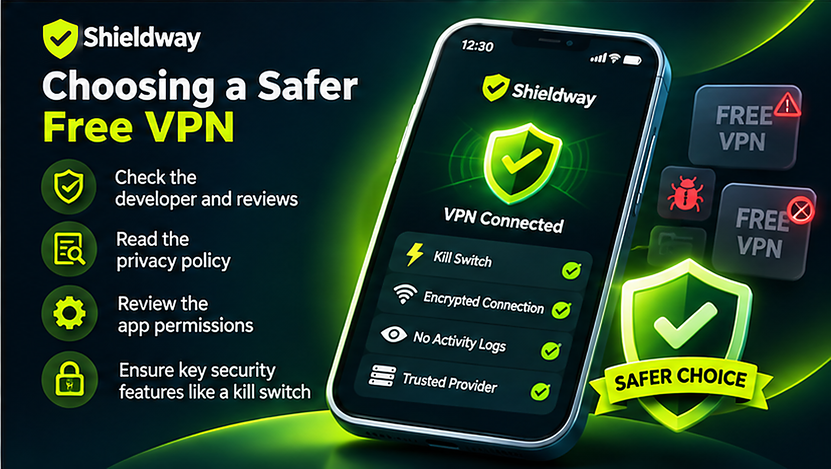
Before choosing a free VPN, find out how the provider finances the service. Look for a clear explanation of whether revenue comes from advertising, subscriptions, affiliate partnerships, business customers, or bandwidth sharing. If the website does not answer this query, investigate further before installing the application.
Next, review what information the service collects and whether it shares that information with third parties. Check whether it records browsing activity, search queries, DNS requests, device identifiers, and connection details. A privacy-first provider should explain whether browsing history remains on its servers after disconnection and whether it may sell the data to advertisers or analytics companies.
You should also check its security features. Modern encryption methods, private DNS, a kill switch, secure applications, and a clear account security process can help protect your data. Always use HTTPS when accessing websites, even when connected to a VPN. A VPN adds a layer of security, but it does not replace good cybersecurity habits.
If you are looking for a VPN on your phone, check its permissions and whether its software contains unnecessary tracking libraries. Understand what services use your connection, whether external bandwidth is shared, and whether the provider can explain its business relationships. Remember that you’re the product is a useful warning about poorly disclosed advertising and data monetization, but it should not be applied automatically to every free plan.
Frequently Asked Questions
Free VPN business models can be difficult to compare because providers use different sources of revenue and different privacy practices. These answers address common questions about data sales, advertising, trust, and whether a free plan is worth using.
Do free VPN providers sell your personal data?
Some do, but not all. Certain providers collect browsing information, device identifiers, IP addresses, or advertising IDs and share them with advertisers or data brokers. Others use freemium subscriptions, community funding, or bandwidth sharing instead. Top10VPN's 2024 investigation found that 71 of 100 tested free Android VPN apps shared some form of personal data with third parties. Always check the provider's privacy policy and look for independent research rather than assuming every free VPN operates in the same way.
Are there free VPN providers that do not sell user data?
Yes. Some providers offer free plans supported by paid subscribers, donations, or other disclosed revenue sources. Proton VPN, for example, states that its free plan is funded by paying members rather than personal data sales. Shieldway uses a separate bandwidth-sharing model through ByteConnect for its free access. These models are different, so examine the relevant privacy policy and consent requirements before choosing a service.
Why do free VPNs show ads?
Advertising provides a direct source of revenue. Advertisers pay to display banners, sponsored content, or promotional messages inside an application. Some advertising models also involve third-party analytics or personalization, which can require collecting information about users. However, displaying ads does not automatically mean a VPN sells browsing history. The important question is whether the provider shares personal information with advertising partners and whether that sharing is explained in its privacy policy.
Can you trust VPN companies?
You can trust a VPN company only after examining its ownership, business model, security practices, and data handling. A paid subscription does not automatically guarantee privacy, just as a free plan does not automatically mean the provider is dishonest. Look for clear policies, transparent revenue sources, independent security testing, and a history of responsible operation. Also remember that using a VPN transfers some trust from your ISP to the VPN provider itself.
Are paid VPNs worth it?
Paid VPN services can be worth the cost when they provide better infrastructure, more server locations, additional security features, reliable support, and clearer business incentives. Subscription revenue means the company does not necessarily need to rely on advertising or data-sharing arrangements to finance its service. However, you should still check its privacy policy, logging practices, ownership, and audit evidence. A paid VPN is not automatically trustworthy simply because it charges money.
Is a free VPN ever a good choice?
Yes. A free VPN can be a good choice when it comes from a reputable provider with clear privacy documentation and a sustainable revenue model. It may be enough for occasional browsing, basic connection protection, or testing a service before upgrading. Before installing one, check its encryption, available security features, data restrictions, and business model. If the provider cannot explain how it makes money, consider choosing another service.
Is Proton VPN blocked by Netflix?
Not entirely, but Netflix often blocks IP addresses used by Proton VPN's free servers. Proton VPN's paid plans support Netflix streaming, while its free plan does not include streaming coverage. If Netflix displays a VPN or proxy error, it does not automatically mean your account has been banned. You can check Proton VPN's Netflix compatibility guide and Netflix's official VPN troubleshooting instructions.
Can the FBI track a VPN?
Yes, the FBI may be able to identify someone using a VPN, depending on the available evidence and the provider's data retention practices. A VPN encrypts traffic between your device and the VPN server, but it does not make you immune to investigations. Authorities may obtain account records, connection logs, payment information, or other evidence through appropriate legal procedures. A strict no-logs policy can limit the information available from a VPN provider, but it does not guarantee complete anonymity. The Center for Democracy and Technology's VPN transparency guidance explains why logging practices and responses to lawful data requests matter.
Conclusion: How Do Free VPN Providers Make Money?
Free VPN providers make money in several ways, and selling personal information is only one possibility. Advertising, premium subscriptions, affiliate partnerships, business bundles, donations, and bandwidth sharing can all support a free VPN service. What matters is whether the company explains its revenue model and treats user privacy responsibly.
Shieldway's ByteConnect arrangement demonstrates an alternative to conventional advertising and data monetization. Its free VPN access is supported by bandwidth sharing, which users must enable before connecting. The separate SDK policy explains what information is processed and how participating devices contribute unused bandwidth. Users should review those disclosures and decide whether the arrangement fits their expectations.
Before choosing any free VPN, remember:
Free VPNs do not all make money in the same way.
Paid subscriptions can subsidize free plans through a freemium model.
Advertising does not automatically mean that a provider sells browsing history.
Some free VPNs collect and share personal information with third parties.
Bandwidth sharing is a separate monetization model that can involve your IP address and unused internet connection.
Check privacy policies, company ownership, independent security research, and consent requirements.
Paid VPNs are not automatically trustworthy, and free VPNs are not automatically unsafe.
Choose a provider that explains how it makes money and what it collects.
Ultimately, a free VPN should not require you to surrender more privacy than the protection it offers is worth. Understand the business model before connecting, and choose a provider whose revenue source and data practices you can accept.