
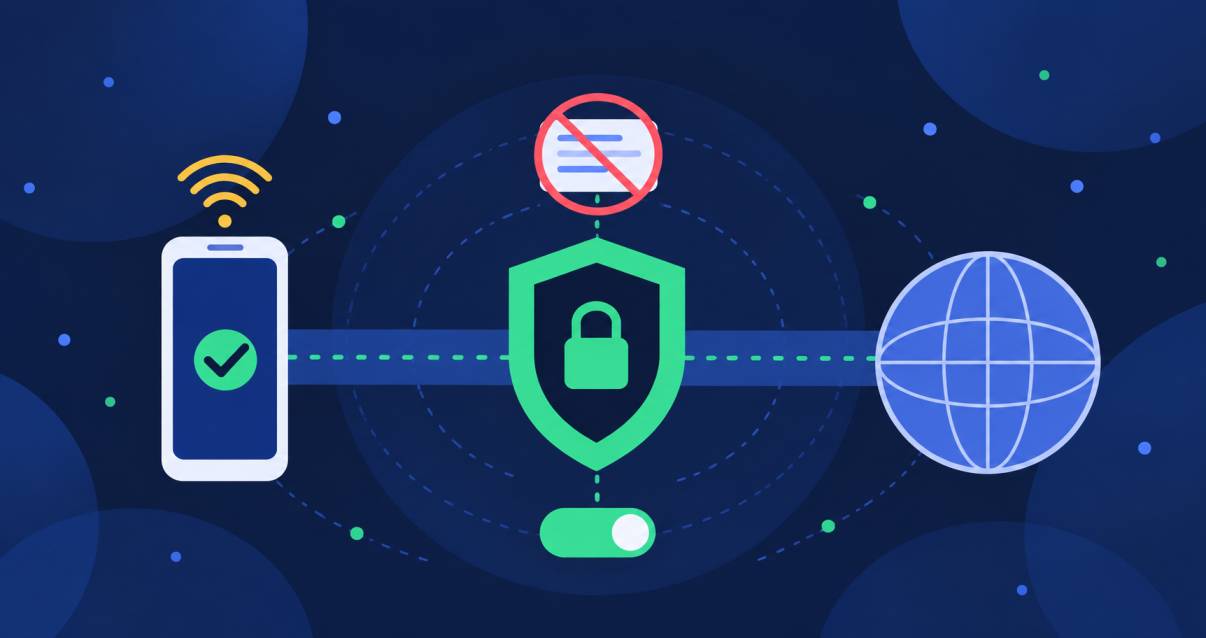
Free WireGuard Tunnel: How to Set Up a Free WireGuard VPN Tunnel or Wireguard Server
If you want free WireGuard access without a credit card, Shieldway offers a free option that supports WireGuard without requiring payment information. Other providers, including Proton VPN, also offer free VPN plans, although the available protocols, server locations, data limits, and signup requirements can differ.
A free VPN trial can also provide temporary access to premium features, but not every trial is available without credit card details. Some providers require payment information before activation, while others let you create an account and start using the service without entering billing information.
Before signing up, check whether the provider offers free WireGrd, whether a credit card is required, what servers and locations are available, and whether the free option has data or device restrictions. This guide explains how to find a free VPN trial with no credit card, how WireGuard access works, and what to check before connecting.
Free Trial or Free Plan: What's the Difference?
A free trial gives you temporary access, while a free plan normally stays available without requiring a full subscription.
A trial might last 24-hour periods, several days, or even a month. Some providers advertise a 7-day free trial, while others let you begin without payment information.
A permanent free plan normally comes with restrictions instead. These can include fewer server locations, limited data allowances, fewer supported devices, or reduced access to advanced security features (the only exception is Shieldway which gives access to premium features from the get-go).
What to Check Before Signing Up
Look at these details first:
Trial length
Renewal conditions
Whether a credit card required notice appears
Available locations
Data limits
Supported devices
privacy policy
Security features
This takes a few minutes but can prevent an unwanted subscription later.
How to Get Free Access Without a Credit Card
If avoiding a credit card is your priority, look specifically for a provider that explains whether a credit card needed notice applies rather than assuming every trial works that way.
Some services advertise a free option but still ask for billing information before activation. Others allow full registration without any payment method at all — a genuine trial with no credit card.
A free VPN trial can be useful if you only want to test the connection occasionally.
Step 1: Find a Suitable Provider
Start with providers that clearly explain their free access model.
Shieldway, for example, currently offers a free option that doesn't ask for a card and supports the WireGuard protocol. Its free service has a specific condition involving ByteConnect data sharing, so users should understand that before connecting.
Step 2: Check the Restrictions
Don't stop at the word "free."
Check:
Which locations are available
Whether there is a data limit
How many devices are supported
Which protocols are included
Whether a kill switch is available
What information is collected
Step 3: Complete Registration
The signup process should make credit card requirements clear from the start.
A typical registration may ask only for an email address and password, but requirements vary between providers, so don't assume.
If a provider advertises free registration, check whether credit card details appear anywhere before you finish the process.
Step 4: Download the App
Using an official application is usually easier than manually configuring a connection yourself.
Shieldway provides downloads for Windows, macos, and Linux through its official download page. Use the official page to download the app rather than relying on third-party copies.
Can You Get a Free WireGuard VPN Account?
Yes. An account can be provided by a virtual private network service that includes the protocol in its free tier.
It is an open-source design built around modern encryption and a relatively small codebase. The official project provides clients for major platforms, including Windows, macOS, Android, and ios.
It's worth understanding that this protocol on its own does not give you a location to connect through — you still need access to a compatible server, since it's only the tunnel, not a full service by itself.
A basic setup therefore includes:
A compatible application
A server
A config
The required keys or credentials
This is why simply installing the client doesn't automatically connect you to the internet through a remote location.
How to Get Free WireGuard Access
If you're searching for how to get this kind of access for free, the easiest route is normally a provider that handles the server infrastructure for you.
A free offering may hand you access through its own app, or give you a config file you can import into the official client.
Free VPN Service vs. Self-Hosted WireGuard Setup
You can host the protocol yourself on a VPS or spare machine, but it takes more technical effort. You may need to manage:
Linux
SSH
Firewall rules
Private keys
Network settings
Software updates
Using a provider avoids most of that maintenance. For beginners, this is generally the simpler path to a working free connection.
Why Use WireGuard?
It was designed to be lightweight and straightforward compared with older protocols like OpenVPN.
Historical testing published by the project recorded roughly 1,011 Mbps in its own test environment, versus around 258 Mbps for the older protocol. The team notes those numbers are old, so they shouldn't be treated as a guarantee of current performance.
Your actual results when you connect to a server depend on:
Distance to the location
Network congestion
Your own internet connection
Hardware
Provider infrastructure
Protocol benchmarks are useful context, but your own connection is what ultimately determines the level of security and speed you get.
What Should You Look for in a Free Service?
A free option can be genuinely useful, but it should be transparent about its limitations. Also, free VPNs are increasingly common: Security.org's 2026 survey found that 43% of VPN users reported using a free VPN, up from 28% in 2025.
Privacy
Read the privacy policy before you connect to a server. This kind of service handles your traffic, so it matters what's collected and retained, and whether the provider follows a strict no-logs policy.
Security.org's 2026 research found that 62% of surveyed users considered the absence of activity logs very or extremely important. On top of that, Proton reported in August 2026 that, after examining more than 7,000 mobile VPN apps worldwide, 85% of VPN apps downloaded in the U.S. contained trackers, while about a quarter actively tracked users' physical location. Proton also reported that 64 of 390 VPNs downloaded from the U.S. Apple App Store and Google Play were owned by Chinese companies.
Shieldway publishes a no-logs policy explaining what it does and does not record, which is what every VPN provider should do.
Security Features
Look for:
Modern encryption
A kill switch
DNS leak protection
Support for the WireGuard protocol
Clear security and privacy documentation
Regular app updates
A kill switch can cut normal internet traffic if the protected connection unexpectedly drops — it's worth taking a moment to test the kill switch once you've installed the app, so you know it will keep you safe if the tunnel fails.
Shieldway: Free VPN Access Without a Credit Card
Shieldway currently provides a free option that doesn't require a credit card and supports the protocol.
Its website lists features including 90+ locations, a hard kill switch, private DNS, automatic server selection, speed testing, and support for two devices on its free plan.
There's one important condition to understand: the free service relies on ByteConnect bandwidth sharing. Shieldway explains this requirement before users activate the service.
That means "free" doesn't mean there are no conditions at all — read the details and decide whether this model suits you before you connect to a server.
How Much Data Do Free VPN Plans Provide?
This varies considerably between providers.
Some free services cap monthly usage, while others advertise unlimited bandwidth but restrict other parts of the service instead. A few even claim unlimited data, so it's worth checking what that actually covers.
For normal browsing, email, messaging, and occasional use, a modest allowance is usually enough. Heavy streaming and large downloads consume far more.
When comparing plans, check whether "unlimited" refers to data, speed, locations, or something else entirely.
Free vs. Paid Access
The biggest difference is usually the amount of access available rather than whether the underlying technology works.
Feature | Free option | Premium plan |
Price | Free | Subscription |
Locations | May be limited | Usually broader |
Data | May be restricted | Usually more generous |
Devices | May be limited | Usually more |
Features | Basic | More extensive |
Support | May be limited | Usually broader |
Protocols | Depends on provider | Usually broader |
A paid plan can make sense if you need many server locations, generous data, several devices, or advanced features. A premium VPN may provide more flexibility, while a free option may be enough if your needs are simpler.
What About Surfshark, NordVPN, and Proton VPN?
When researching options, you'll often come across names like Surfshark, NordVPN, and Proton.
Their pricing, trial policies, free access, and available features differ, so these virtual private networks shouldn't be treated as interchangeable.
Proton is particularly relevant here, since it has offered a free tier alongside its paid products — you may also see the term protonvpn come up in searches for free access.
When comparing the best virtual private network services, focus on the actual terms rather than the brand name:
Is payment needed upfront?
How long does the trial last?
What locations are included?
Is the WireGuard protocol available?
Are there data restrictions?
What happens when the trial ends?
What Does a 30-Day Money-Back Guarantee Mean?
A 30-day money-back guarantee is different from a genuinely free trial.
With a 30-day money-back guarantee, you normally purchase a subscription first. If you meet the provider's conditions, you can request a refund during the stated period.
A free trial, by contrast, lets you use the service before committing to a paid subscription.
This distinction matters if you specifically want a risk-free way to test the service without entering billing information.
The guarantee can still be useful for testing, but it isn't the same as a no-payment trial.
Can a Free Service Be Completely Free?
Yes, but "completely free" can describe different business models. A provider may offer:
A permanent free tier
A short free trial
A freemium model
A refund guarantee
Free access supported by another business model
Some services also restrict locations or data. That's why truly free shouldn't be confused with unlimited access to every feature — always free rarely means free of every limitation.
What About a VPN Trial Without Payment Details?
If you specifically want a VPN trial with no credit requirement, check the payment terms before registering.
Some providers clearly state that no billing information is necessary; others require a card even though the first period costs nothing.
Check the following before entering your account details:
Payment method
Renewal date
Cancellation process
Trial duration
Refund terms
Some providers require payment details, so this check matters if you want a free VPN without credit card registration.
Free Trial VPN Checklist
Before starting any trial, ask:
Is it genuinely free?
Is a card required?
Are payment details requested?
How long is the free trial period?
Does it automatically renew?
Which locations are available?
Is the protocol included?
Are there data restrictions?
What data is collected?
Is a kill switch included?
Does the app support your device?
This checklist makes it easier to compare trial options without relying only on marketing claims.
Everyday VPNs Use
A free VPN can be appropriate for occasional browsing, public Wi-Fi, travel, and testing.
Users with heavier requirements may need a paid plan instead — for example, someone who wants many international locations and constant streaming has different needs from someone who has used a VPN occasionally for privacy on a laptop.
The same applies on mobile. An app may support iOS and Android but offer different features depending on the platform. In fact, some providers even offer three days on Android before requiring an upgrade.
Also, a 2026 Tom's Guide poll of almost 2,000 readers found that 48% used a free VPN primarily for streaming or privacy, showing that free VPNs are not limited to occasional testing.
If you want to test the VPN, check how the app performs on your own connection rather than relying only on advertised speeds.
What Does "Free" Actually Mean?
The phrase can refer to a few different things.
Free Plan — Ongoing access without a subscription, usually with restrictions.
Free Trial — Temporary access before purchase is required.
Money-Back Guarantee — A paid subscription that can potentially be refunded within a set period.
Freemium Service — Basic access is free while additional features require payment.
Understanding which model you're getting matters more than the label attached to it.
Frequently Asked Questions
The questions below cover the most common concerns about free VPN trials, WireGuard access, credit card requirements, privacy, security, and everyday use. They also clarify the difference between a free VPN plan and a temporary trial, so you can understand what to check before creating an account.
Free VPN Accounts and Trials
Can I create a free account with WireGuard support?
Yes. Some providers include it in their free tier. Check the provider's current requirements and available locations first.
Can I get free access without entering card information?
Yes. Some providers allow registration without payment details. Check the signup page before completing it.
What is a free trial account that protects your privacy?
It's an account created specifically to access a provider's trial period, which may unlock premium features temporarily. A VPN free trial account can be useful when comparing different services.
Do trials always require payment information?
No. Some providers offer free trials without any payment information, while others require payment details.
WireGuard, Servers, and Security
Is there a free server option that supports this protocol?
Yes. Some services offer it as part of their free plan. Availability and restrictions vary.
Does a free plan encrypt traffic?
A properly configured tunnel will encrypt traffic passing through it. The exact implementation depends on the protocol and provider.
Are free services safe?
They can be, but you should evaluate the provider's privacy practices, security features, infrastructure, and business model before you connect to a server.
Devices and Everyday Use
Can I use it on a phone?
Yes. The protocol has official clients for both iOS and Android.
What is the difference between free users and premium users?
Free users may get fewer locations, features, devices, or data than premium users on a paid plan.
Is a free plan suitable for streaming?
It depends on the provider — VPN servers capacity, location availability, and data restrictions can all affect the experience.
Conclusion: Choosing a Free VPN Trial Without a Credit Card
A free trial VPN can be a useful way to evaluate a service, but you should always check the conditions before signing up.
If avoiding a card is important, look specifically for a provider that doesn't require one. If WireGuard is your priority, confirm it's available on the free tier rather than assuming it's included.
Shieldway currently offers free access with support for the protocol and no payment requirement, while its free model uses ByteConnect data sharing. Review the provider's features, download page, and privacy policy before deciding whether it fits your needs.
The right choice ultimately depends on how you plan to use the connection: occasional browsing may need very little, while frequent streaming, travel, or multiple devices may call for a different type of plan.